
Jump To:
Additional Resources
Contact:
Email Jon Hébert:
jon@jonhebert.com
Links:
jonhebert.com
IG: jon.hebert.creates
Publisher: University of Louisiana at Lafayette Press
ulpress@louisiana.edu
ulpress.org
Publication Date:
August 4, 2026
Price: $19.95
Format: Paperback
ISBN: 978-1-959569-37-4
Purchase link: https://ulpress.org/products/hear-this-a-twisted-tale-of-sonic-torment
Hear This! Synopsis:
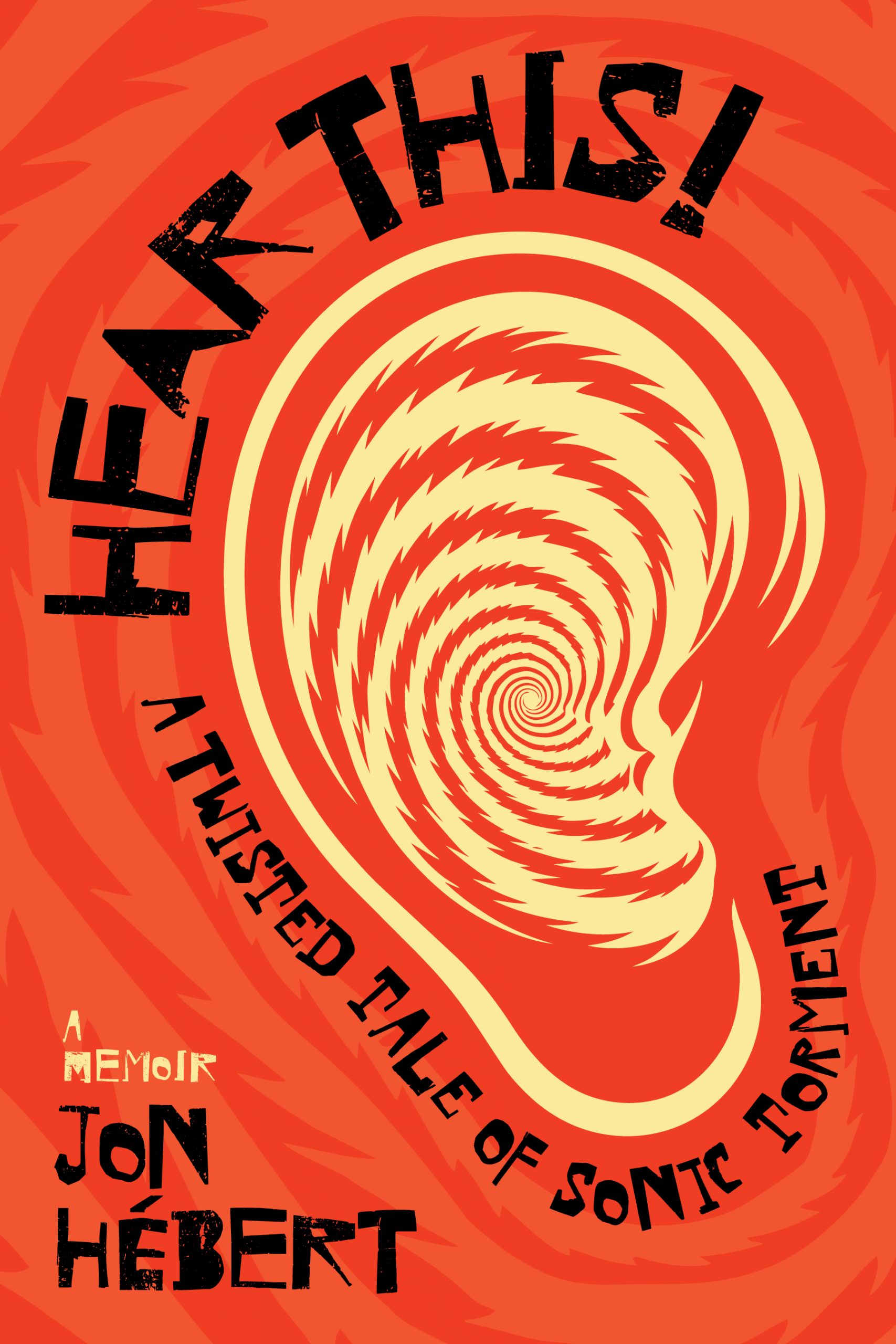
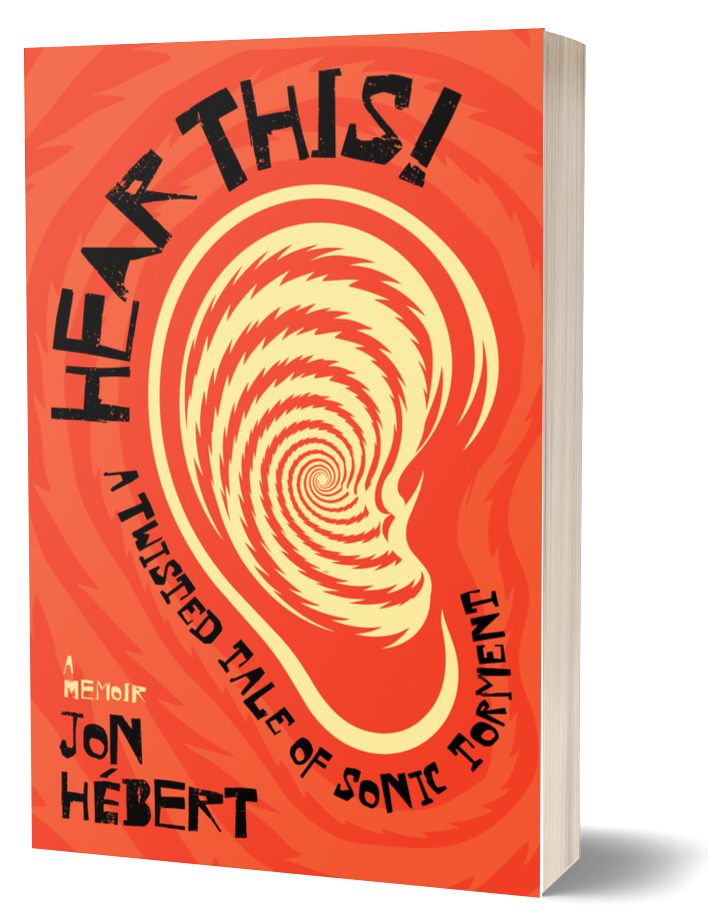
New Orleans rocker Jon Hébert cranked his amp up to ten every night for years. Suddenly, a rare hearing sensitivity disorder turns his amplifier’s lowest setting into a source of agony, sending him spiraling into chronic pain, isolation, and a crisis of identity that costs him the thing he loves most: music. Part dark comedy, part medical mystery, part psychological thriller, Hear This! chronicles one musician’s bizarre quest for relief—and his attempt to find healing, humor, and harmony in a world gone completely off-key.
Book Trailer:
Author bio:
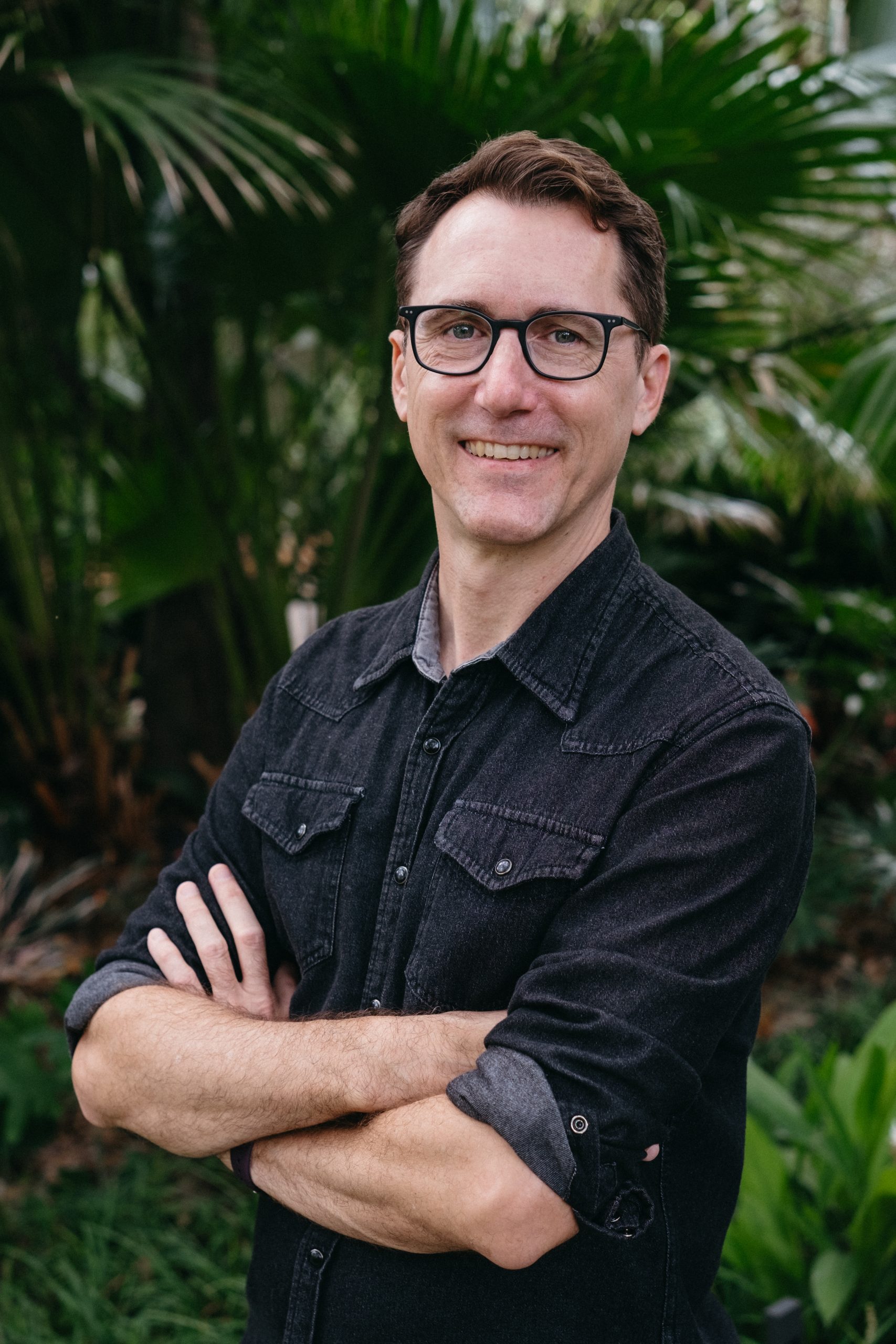
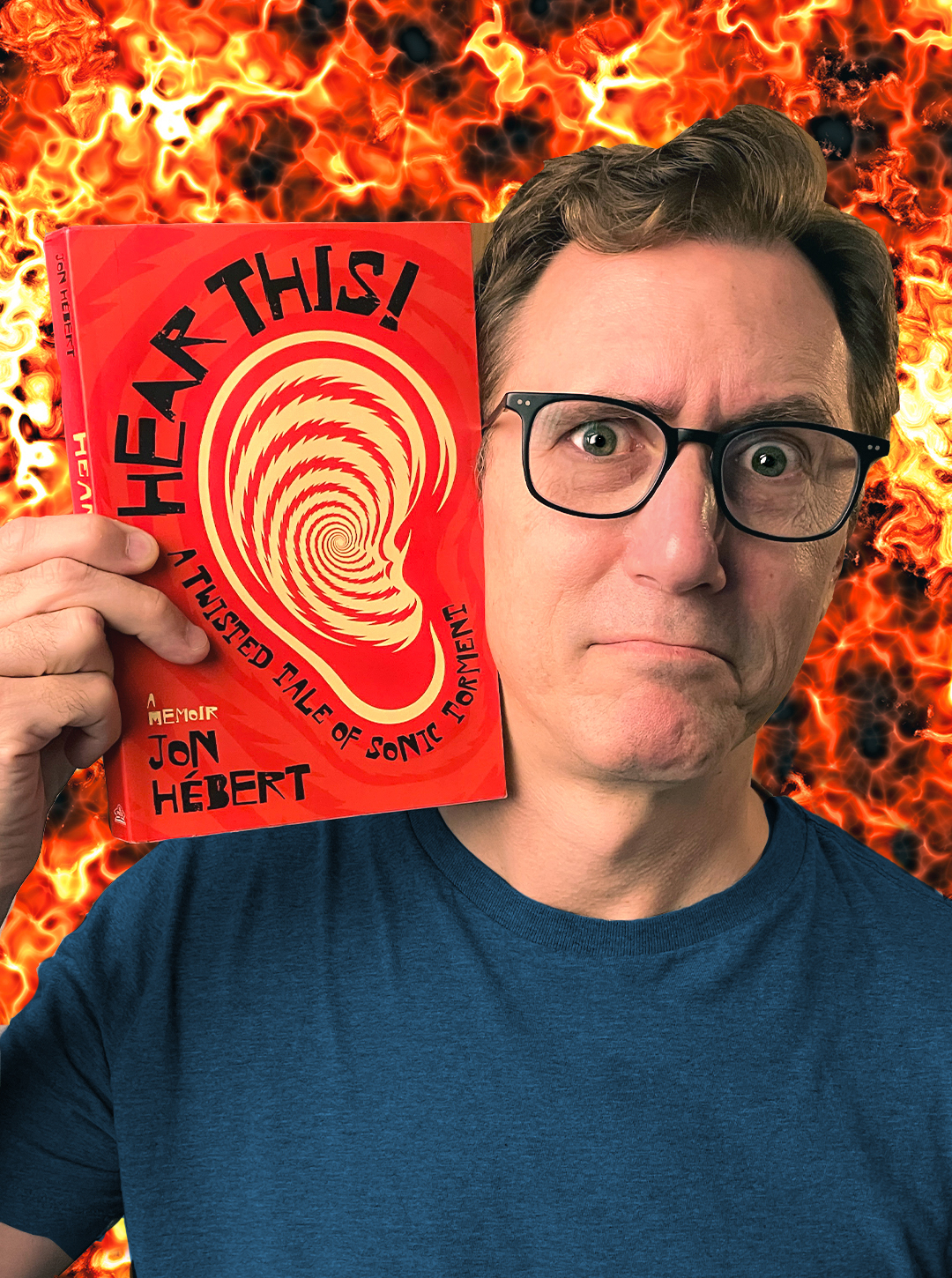
Jon Hebert is a New Orleans author and musician. His spy thriller The Gemstone Peridot and the dark comic noir You’ve Got to Be Killing Me! are both available in the New Orleans Public Library system. Hear This! is his first memoir. His writing has been featured in the New Orleans Library’s Renewed anthology, and the Patty Friedmann Writing Contest anthology. A lifelong musician, Jon has released four albums of original roots and rock music and has been reviewed in New Orleans’ renowned Offbeat Magazine. He lives in New Orleans with his girlfriend and their blind cat, who edits most of his work.
Endorsements:
“With the heart of a musician, the soul of a writer, and the spirit of a survivor, Jon Hébert brings readers through his poignant story with brilliant emotional timing that will keep the pages turning. For anyone who’s ever faced an unwanted diagnosis, an unexpected obstacle, or an unfair turn in life, this one’s for you, especially if you need a little reminder that the song of hope continues, even in the dark.” Julie Cantrell, New York Times and USA Today bestselling author of The Feathered Bone
“This memoir captures the very real emotional suffering that can come with tinnitus and hyperacusis—the fear, vigilance, isolation, and exhaustion that so many people experience, often invisibly. At the same time, it offers something equally important: the possibility of healing, adaptation, and finding life again.” Dr. Jennifer Gans, psychologist & tinnitus specialist
“With gallows humor and a satiric eye that recalls Vonnegut, Jon Hébert lays bare the pain and the pathos of being a working musician dealing with not one but two catastrophic hearing afflictions. Good thing for him and for us that he can write, too—and that he has delivered this lively, observant, and ultimately hopeful memoir about his struggle, one that is sure to entertain whether you are similarly afflicted or not.” Tom Andes, Shamus Award-winning author of Wait There Till You Hear from Me
“Jon Hébert’s memoir is a 21st-century odyssey of unrelenting trial and recovery, through the streets of New Orleans and his Mid-City neighborhood and beyond: to Mexico, to a blueberry farm, to Heaven and Hell. The brilliant descriptions of not only the medical conditions that inspired the book, but of the world around him, describe a rich and thoroughly fascinating inner life.” Gina Forsyth, fiddler and award-winning singer-songwriter
“As a New Orleans stand-up comedian, I live for seeing struggles turned to comedy, which is just what this book does. Jon’s fast-paced, heartfelt comedy gives us the laugh—and cry—we all need when facing modern American healthcare, as well as life and love at large.” Tina McCrory, comedian & speech-language pathologist
“A gifted songwriter, novelist, and aspiring comedian, Hébert lives out his dreams until a life-altering hearing condition takes it all away. It’s honest, funny, and quietly devastating in all the right ways.” Buzz Jackson, singer-songwriter
“Jon brings his humor, humanity, and artistic lens to this meaningful and helpful guide through a challenging sonic journey—read this book!” Nicole Rochat, LMSW, CIHC
Q&A / Talking Points:
1. Q: What inspired you to write Hear This!
A: I wanted to share my years-long journey of living with tinnitus (ringing in the ears) and hyperacusis (pain-inducing sound sensitivity), the unexpected toll it took on my music career and mental health, and how I found healing through community, humor, and mindfulness meditation. Also, most literature about tinnitus is clinical and somber. Hear This! offers real-world advice and hope, and shows how I found humor in the most frightening, difficult time of my life.
2. Q: How did your hearing sensitivity disorder impact your life?
A: It forced me to step away from music entirely for around three years. I had to shift my method of self-expression to writing. I found writing as fulfilling as music, but even the clacking of the keyboard got rather loud at times. As far as everyday living, the most innocuous sounds caused physical pain in my ears. The simple act of cooking in the kitchen, with pots and pans clanging, was horrific. Children’s laughter drove me mad. The voices and laughter of my loved ones were troubling at times, and in the worst times, even the sound of my own voice. It caused me to isolate, further deteriorating my mental health. Calling friends was difficult because the phone’s tiny speaker was unbearable to listen to.
3. Q: How does humor play a role in your memoir?
A: You know that saying about laughter being the best medicine? Science backs it. I started the memoir after reading Furiously Happy by Jenny Lawson. She tackles physical and mental health issues with cutting humor, and inspired me to start my memoir as a form of therapy. It felt natural, because some of the situations I found myself in were absurd (the ENT who laughed me out of his office when I told him I had pain with tinnitus; going to my first acupuncture appointment to battle the feeling of pins and needles in my ear by being stuck with actual pins and needles). Writing about these situations, making fun of them, helped me to see my plight differently and got me out of my head.
4. Q: Who is the intended audience for Hear This!?
A: Anyone who struggles with chronic health challenges, sensory disorders, or life-altering setbacks—but also people who enjoy candid, funny storytelling or delving into psychology and neuroscience. Musicians, writers, and creative types will find parts of themselves in the book, too.
5. Q: How did you find healing after your hearing challenges?
A: Through a mix of sound therapy, TMJ treatment, and mindfulness meditation (the most un-rock-and-roll thing I’ve ever done). I also leaned on humor and writing to reclaim a sense of control, which became a surprising part of the recovery process.
6. Q: Are there moments of tension or drama in the book?
A: Absolutely. Beyond the physical discomfort, there’s the emotional struggle of losing my musical voice, coping with isolation, and learning to navigate a world that often doesn’t understand invisible disabilities. I went a full year with nine health care practitioners unable to diagnose or treat my conditions. What I went through also tested the limits of my relationship and my ability to do anything outside of my house. Then there’s the moment God called me to Heaven to stand trial for making fun of Him in the memoir. At one point I become a spy and plot to steal a government-sanctioned tinnitus-curing device (but I deny my involvement—you can’t make me talk!).
7. Q: Did your background as a musician influence the book?
A: Yes. For so long, music was my lens for experiencing life. Losing it—even temporarily—was devastating. Writing the memoir allowed me to explore the intersection of sound, silence, and identity, and how we attach meaning to the auditory world. I also spoke with many musicians about what I was going through, and learned about how others handle tinnitus as well as the other hazards of being a professional musician. I learned about major stars sidelined from the stage because of struggles with hearing issues. One of the treatments often talked about is mindfulness meditation. It was the treatment that kicked off my healing journey.
8. Q: How is Hear This! different from other memoirs about health challenges?
A: It blends humor, personal insight, and sensory experience in a way that’s rarely seen. Most books on hearing disorders are clinical or somber; mine is honest, funny, and deeply personal. It also offers a behind-the-scenes glimpse of what it is like to be a working musician in New Orleans, and the current state of treatments for hearing conditions such as tinnitus and hyperacusis. The memoir veers into absurd territory at times, almost fiction, to instill in the reader how fractured my mind became because of these hearing conditions.
9. Q: What message do you hope readers take away?
A: The audiologist I worked with told me something very important in the first weeks of the onset: It will get better. And she was right. Many people take their lives because of tinnitus, which is a sad, sad fact about this condition, which often becomes manageable. With hyperacusis, there are treatments, though they take some time to work. The good news is that many people who suffer with it get better. Most importantly, I wanted to share my story to offer hope. And if you laugh in the process (either with me or at me), at least I got you out of your worry cycle for one brief, hopefully funny moment.
10. Q: Can you describe a moment in the book that stands out for you?
A: I have described many of them above. Other stand-out moments include my partner striving to understand what I was going through, and sticking by my side. I learned about neuroplasticity—the brain’s ability to rewire itself. I learned the science behind mindfulness meditation, sound therapy, and the healing power of laughter. I taught mindfulness meditation techniques to other tinnitus sufferers, and watched their minds open when they experienced this powerful healing tool. By advocating for my health, I met a handful of doctors and nurses who actually cared for me and wanted me to get better. I also learned disturbing facts about ducks. Seriously, if you interview me, for the love of God, don’t ask about the ducks.